The Trade Show Exhibitor's Guide to Not Wasting Your Budget
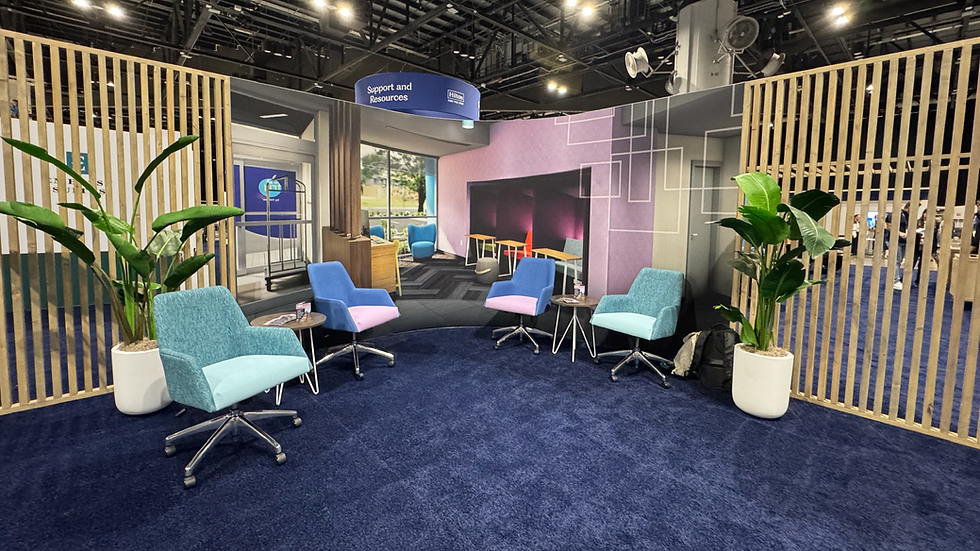
Every year, companies spend thousands (sometimes hundreds of thousands) of dollars on trade show exhibits. They invest in the booth design, the graphics, the giveaways, and the travel. They show up, they set up, and they execute.
And then they walk away feeling like something was missing.
Not because the booth looked bad. Not because the team wasn't prepared. But because somewhere between the planning and the floor, the exhibit stopped being an experience and became a display.
After years of managing trade show production and exhibitor logistics for corporate clients across the country, we've seen this pattern more times than we can count. We've also seen what happens when an exhibitor walks away with real leads, real conversations, and a measurable return on every dollar spent.
The difference almost always comes down to the same handful of decisions. Here's what we've learned.
Start With the Goal, Not the Booth

The most common mistake exhibitors make is treating the trade show booth as a branding exercise. The graphics are on-brand. The colors are right. The logo is visible from across the floor.
But branding isn't a goal, it's a tool.
Before any design decision is made, every exhibitor should be able to answer three questions:
Who specifically are we trying to reach at this show?
What do we want them to do — or feel — after visiting our booth?
How will we know if this exhibit was worth the investment?
The answers to those questions should drive every decision that follows, influencing the layout, the activation, the staff briefing, the data collection strategy, and the follow-up plan. A booth built around a goal looks and feels fundamentally different from a booth built around a brand standard.
The Logistics Window Is Shorter Than You Think

Here's something most first-time exhibitors discover the hard way: the gap between when you can start setting up and when the show floor opens is almost always smaller than expected.
Load-in windows are governed by the venue, the show organizer, the union rules of the building, and the freight schedule, none of which care about your timeline. A booth that looks simple on paper can require a full day of labor to assemble correctly. Custom elements, AV integration, and branded installations add time that has to be planned for, not hoped for.
The questions to ask before you confirm your exhibit design:
What is the official load-in window for this show?
Are there union labor requirements at this venue?
How is freight being managed: advance warehouse or direct to show?
What's the strike timeline, and does it conflict with any travel?
A production partner who has worked the show floor before will already know the answers. If you're managing this independently, get them in writing before you finalize anything.
Life Outside the Booth Is Part of the Strategy

Trade shows aren't just floor time. The dinners, the afterparties, the hosted receptions, the casual conversations that happen in a hotel lobby at 10pm are often where the most meaningful connections of the entire event get made.
The mistake many exhibitors make is treating everything outside the booth as downtime. It isn't. It's a different kind of work that is less structured, more human, and in many ways more valuable. The prospect who walked past your booth twice without stopping might be sitting next to you at the conference dinner. The partnership you've been trying to schedule a call about for three months might close over drinks at the afterparty.
Show up to the social programming with the same intentionality you bring to the floor. Know who's in the room. Have a genuine reason to introduce yourself. And give yourself permission to step away from the booth mindset because the best conversations happen when you're not in sales mode.
The trade show floor is where you make impressions. Everything outside it is where you make relationships.
Your Booth Staff Is Your Most Important Asset so Brief Them Like It

A beautifully designed exhibit with an unbriefed team is one of the most common, and most avoidable, trade show failures.
Staff who don't know the talking points default to waiting. Staff who don't know the data collection process miss leads. Staff who don't know the goal of the activation can't steer conversations toward it.
A great staff brief covers:
The goal of the exhibit — what are we here to accomplish?
The target visitor — who are we most excited to talk to, and why?
The conversation opener — how do we engage someone walking past without being the booth that stops people in their tracks for the wrong reasons?
The data collection process — how are leads being captured, and what qualifies as a lead worth following up on?
The schedule — who is staffing when, where are breaks, and who is the point person for logistics questions?
Thirty minutes of briefing before the show floor opens can be the difference between a good show and a great one.
Data Collection Is Not an Afterthought

Most exhibitors have some version of a lead capture process. Very few have a lead capture strategy.
There's a difference.
A process captures badge scans or business cards. A strategy connects every interaction to a follow-up plan including instructions for who gets contacted, when, with what message, and by whom. It also means thinking about data collection as part of the exhibit design, not something bolted on at the last minute.
The best activations we've seen are built around a natural data exchange, meaning something of genuine value offered in return for a conversation or a contact. Genuine reasons for the right people to stop, engage, and hand over their information willingly is always more effective than a giveaway of an iPad.
If your exhibit doesn't have a clear answer to "what happens with the leads we collect after the show," that's the first thing to fix before the next one.
Budget Intentionally, Not Optimistically

Trade show budgets have a tendency to expand. Custom fabrication costs more than the render suggested. Shipping costs more than the quote. Drayage — the cost of moving freight from the loading dock to your booth space on the show floor — is one of the most reliably underestimated line items in the industry.
A few principles we apply to every trade show budget we manage:
Get the drayage estimate early. It's calculated by weight and distance, and it can be significant. Know the number before you finalize your exhibit design.
Build a contingency line. Ten percent is a floor, not a ceiling, for first-time shows at a new venue. Things change on the show floor. Budget for it.
Prioritize the experience over the footprint. A smaller, well-executed booth with a clear purpose almost always outperforms a larger booth that's trying to do too much. Spend where the experience lives.
Track in real time. A budget reviewed after the show is a post-mortem. A budget tracked throughout the planning process is a tool. Know where you stand at every stage so there are no surprises when the final invoices arrive.
The Exhibitor Checklist We Use Every Time

Before every trade show we manage, our team works through the same core questions:
Goal: What is this exhibit designed to accomplish?
Audience: Who are we targeting, and why are they at this show?
Design: Does the booth design support the goal, or just the brand?
Logistics: Is the load-in window realistic for the exhibit we've designed?
Labor: Are union requirements accounted for in the budget and timeline?
Freight: Is freight being shipped to an advance warehouse or direct to show?
Staff: Has the team been briefed on goals, talking points, and lead capture?
Data: How are leads being captured and what's the follow-up plan?
Budget: Is contingency built in and is the budget being tracked in real time?
Strike: Is the teardown timeline planned, including freight pickup?
If you can answer every item on this list confidently before the show floor opens, you're already ahead of most exhibitors in the building.
A Trade Show Booth Is Real Estate

The way we think about it is that every square foot of exhibit space is an investment with a measurable return. The goal of great trade show management is to make sure every dollar spent on that space is working as hard as it can.
That means starting with the right questions. Building an experience around a goal. Managing the logistics with enough lead time to get them right. Briefing the team like the outcome depends on it.
If you're planning a trade show exhibit and want a production partner who thinks this way from day one, we'd love to talk.
Visit pcexperiences.com or connect with us directly to start the conversation.


Comments