What Does a Corporate Event Production Company Actually Do?


By Patrick Crosson, CMP, DES | Chief Experience Owner, PC Events + Experiences
You have the venue booked, the dates locked and 400 people flying in. Someone asks whether you need a corporate event production company, and nobody in the room can say exactly what one would do that your team is not already doing.
Here is the plain answer, from the team that produces general sessions, kickoffs and conferences at PC Events + Experiences.
WHAT IS CORPORATE EVENT PRODUCTION?
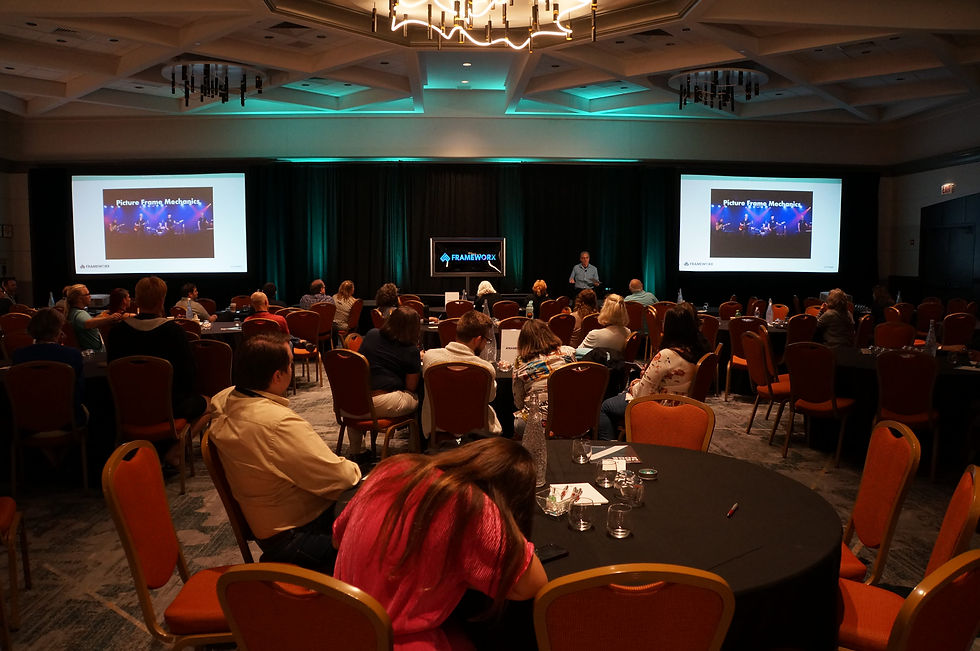
Corporate event production is the work of building and running what happens in the room: the stage, the screens, the audio, the lighting, the speakers and the minute-by-minute script that ties them together.
Think of a general session as a live broadcast that happens once, in front of the people whose opinion of the company it will shape. Production is the crew that builds it and calls it.
HOW IS IT DIFFERENT FROM EVENT PLANNING?
The U.S. Bureau of Labor Statistics says event planners arrange all aspects of events and professional gatherings. In practice, that means where, when, how much and who is coming: venue sourcing, budget, timeline, registration and housing, food and beverage, transportation.
Production answers a different question: what happens once everyone is in their seats. It starts where the agenda stops being a list of session titles and becomes a sequence of cues.
Many events need both, and some firms carry both. PCXP does. Our event management services sit alongside general session and content development, with client services, production and creative on one team. The distinction still matters when you scope an event, because it tells you what you are buying and what is missing.
WHAT DOES A PRODUCTION COMPANY OWN ON THE DAY?
Five things, and the day turns on all five.
The run of show. The minute-by-minute script: who walks on, what is on screen, which mic is live, which lights are up, and who calls each change. Everyone on headset works from this one document.
The stage. Design, fabrication, branding and sightlines. It is what the audience looks at for most of the day.
The AV lead. One person who owns the relationship with the AV vendor, so nobody is translating between the client and the crew mid-session.
Speaker management. Rehearsals, slide handoffs and timing, including the conversation about why a 40-minute talk needs to be 20.
At Hilton's Americas Finance Conference in 2024, that list was the job: internal and external speakers, AV management, run of show development, content management and onsite executive production for the general session, alongside seven breakout tracks. About 400 attendees came, against the 300 expected.
For more on the stage itself, here is how we produce general sessions. For the people side, see what onsite executive production looks like once the doors open.
The Events Industry Council's accepted practices for meeting and event design give planners, venues and producers a shared reference for how a meeting is designed and run, which helps when three companies are building one room.
WHAT HAPPENS BEFORE THE DAY?
Production work is front-loaded. By the time a crew is onsite, most of the decisions are made. Ours follow five steps, and the first starts with a Brand Immersion Meeting.
Listen. Brand immersion, stakeholder conversations, priorities, and audience. What does this meeting have to achieve, and for whom?
Align. Objectives, the priority audience, the actions you want people to take, KPIs and budget, agreed with the people who own them before any creative is drawn.
Plan. The roadmap and timelines: run of show, stage design, AV spec, vendor list and contingency.
Execute. Real-time action across workstreams, with the decision points named in advance. Build, rehearse, run the days.
Optimize. Review results, gather feedback and adjust. Write down what the next one should do differently.
The last step is the one most often skipped, and the cheapest. Here is how we run our post-event debrief.
HOW DO YOU KNOW YOU NEED ONE?
A few signals, in rough order of how often they show up.
You have a general session with more than one speaker and a stage.
Your leadership is presenting, and how it looks reflects on them personally.
The venue quoted AV and you cannot tell whether the quote is right.
Last year's event ran late, and nobody could say exactly where the time went.
You are running breakouts in parallel, and the transitions worry you.
The team doing this is also doing their actual jobs.
The last one is the common case. Internal teams are usually capable and usually at capacity. We produced nine events for G2 over four years, including the G2 Company Kickoff for 300 sales leaders, and the pattern held every time: the client owns the message, and we own the machinery that delivers it. We become an extension of your team, not a replacement for it.
FREQUENTLY ASKED QUESTIONS
What is the difference between an event planner and an event production company?
A planner owns the plan: venue, budget, timeline, registration, food and beverage. A production company owns what happens in the room: the stage, the screens, the audio, the lighting, the run of show and the cues that drive it. Plenty of events need both, and some firms do both under one roof.
What is a run of show?
A minute-by-minute script of the general session. Who is on stage, what is on screen, which audio source is live, which lights are up, and who calls each change. On the day it is the single document the producer, the AV crew and the speakers all work from.
When should I bring in a corporate event production company?
As soon as the content and the room are decided, and before the AV is quoted. A production company brought in at the content stage can shape what is possible. One brought in two weeks out is mostly executing decisions already made.
Do I still need a production company if the venue has in-house AV?
Often, yes. In-house AV supplies and operates equipment. It does not usually write the run of show, direct rehearsals, manage speakers, or own the look of the stage. Those are the parts that decide how the session feels.
How many people does a production company put onsite?
It depends on the number of rooms, stages, and build days. A single-ballroom general session needs a different crew than a three-day conference with breakouts, so the honest answer comes after the room count, not before.
Does a production company replace our internal events team?
No. The best version works as an extension of your team. Your people own the message and the stakeholders. The production company owns the stage, the AV, the run of show and the cues, and adds hands where your team is stretched.
WE GET PRODUCTION DONE.
Have a meeting on the calendar and not sure what production it needs? Talk to our team, in Chicago or wherever your event is. We will tell you what the room requires, including when the answer is less than you expected.


Comments